Ardeo Ergo Sum
AI agents spend money in two ways, and the industry is metering only one. The governance for the other is centuries old.

I tend to focus on the last mile of AI’s technical systems, but there are other critical arenas. The economic last mile (how agents are paid for, identified, and answered for) comes next, and the token reckoning is its opening act. This essay is long, Latin, and legalistic. But it offers a perspective on agents that I think is both investable and inevitable.
In early 2026, a Meta employee built a leaderboard on the company intranet and named it Claudeonomics, after the Anthropic model that had become the house favorite for coding. It aggregated the consumption, or burn, of AI tokens (the units of data a model processes, and the units in which all of this gets billed) across all 85,000 of the company’s employees and ranked the top users. The board awarded cute titles at the top spots like Token Legend and Cache Wizard. And within 30 days the dashboard logged just over 60 trillion tokens, roughly $900 million worth at list prices. The top-ranked individual burned 281 billion tokens alone, more than $1.4 million at list.
This was part of the plan. Meta had told employees that demonstrating AI-driven results would be a core performance expectation for 2026, with bonuses attached at the top of the range. The leaderboard embodied a culture the company had deliberately engineered, one in which token consumption became a core value, supported by rankings, badges, and glory. The burn was the goal.
Days after The Information reported the numbers, the leaderboard came down. But consumption kept climbing, reaching 73.7 trillion tokens in a 30-day window. Two months later, the same company sent a memo warning that internal AI usage alone was tracking toward billions of dollars in 2026. It introduced a new dashboard to monitor usage and spending in real time, along with automated alerts for unusual spikes. It added that starting in 2027, formal token budgets with allocation decisions and supporting tools were coming. Meta CTO Andrew Bosworth had already told staff in an April note that “token usage alone is not a measure of impact of any kind.” In less than six months the company traveled the entire arc from conspicuous consumption to rationing.
Meta ran the experiment most visibly, but it did not run it alone. Engineers at Microsoft admit to burning tokens defensively, so as not to be seen as insufficiently AI-native.
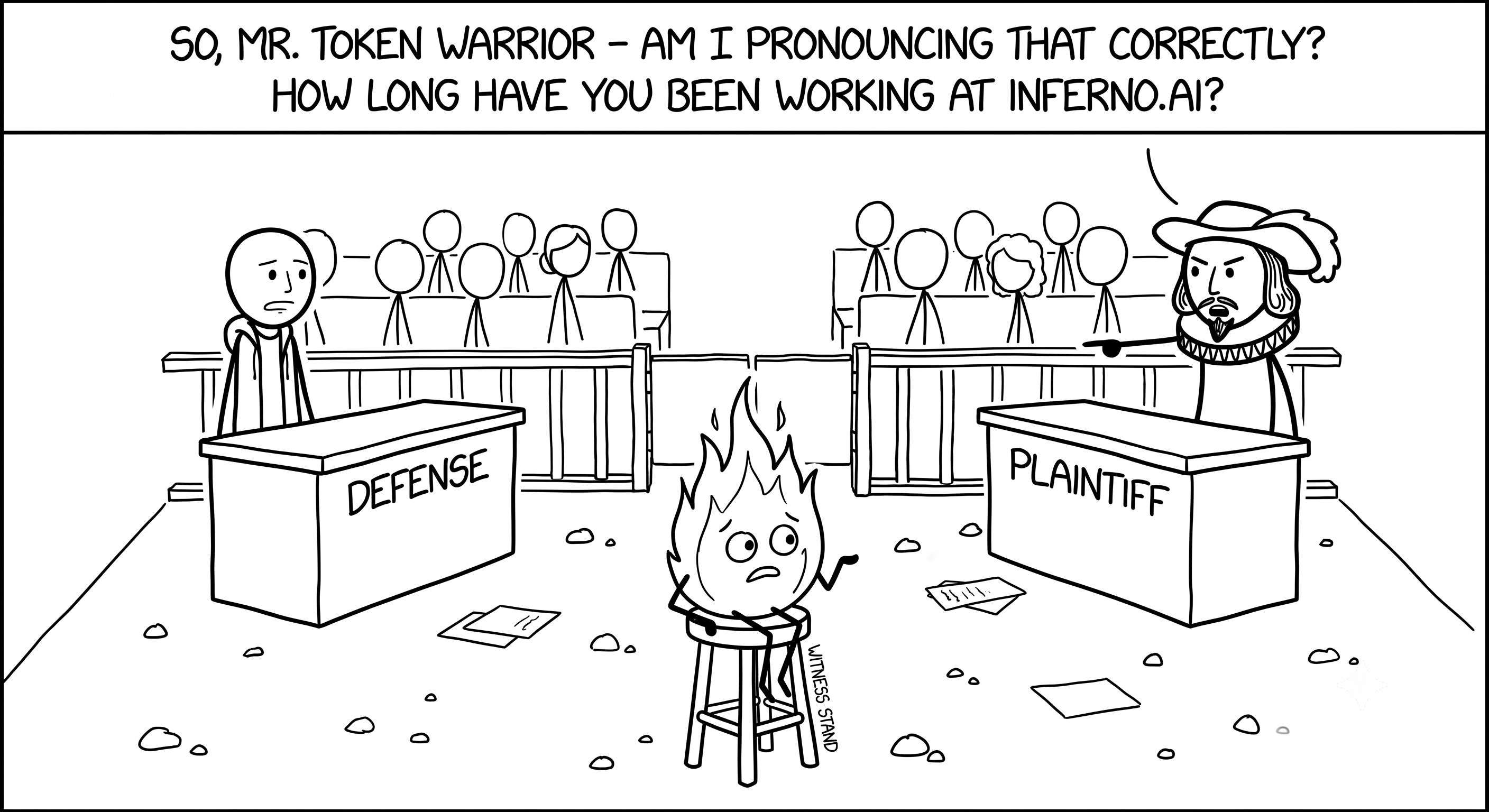
The increase in token consumption wasn’t just leaderboard driven. The way models have evolved and the way they can be used created a token inferno. Reasoning models (which think step by step before answering, burning tokens the whole way) consume orders of magnitude more than their predecessors, and agentic loops with sub-agent delegation multiply that consumption again. Uber rolled out Claude Code (Anthropic’s agentic coding tool) to roughly 5,000 engineers and exhausted its entire 2026 AI budget by April, four months into the year; its CTO conceded he was back to the drawing board, because the budget he thought he would need was already gone (the drawing board has since produced a cap of $1,500 per employee per month). The same week, ServiceNow’s CIO acknowledged that her company’s full-year budget for Anthropic’s coding tools was gone within months, and that the company now watches per-employee usage daily. Her assessment, “It’s a really hard problem.”
It’s reasonable to assume that both firms set their 2026 budgets in late 2025, before the latest families of models changed the game. Box’s Aaron Levie offered the fairest summary of the moment (nobody budgeted for this). In Silicon Valley the answer is to raise more money and fund the tokens; everywhere else it’s learning to ration. Inside a single quarter, the outsized token bill traveled from status symbol to cost center.
There is a shorthand for what happened at Meta, one that started in economics and has been embraced by operations. In 1975 the economist Charles Goodhart (writing about monetary policy) observed that any measured regularity tends to collapse once you place pressure on it for control purposes.1 Anthropologist Marilyn Strathern later compressed this into the version everyone quotes, “when a measure becomes a target, it ceases to be a good measure.” Goodhart’s law is why teaching to the test produces test-takers rather than students, and why counting lines of code died as a productivity metric decades ago.
Tokenmaxxing is Goodhart’s law running at Silicon Valley speed. Token consumption began as a measure, a proxy for how much AI-assisted work was happening, and it became a target the moment it appeared on leaderboards and in performance reviews. At that point it stopped measuring productivity and started measuring the ability to appear productive. It’s a different skill and one the dashboards cannot distinguish from the real thing.
When you flip the script to token austerity, it seems like the correction. The adults arrived to end the party. But austerity caps, meters, and alerts on the very same variable the leaderboards celebrated. A token budget is the leaderboard inverted, and an employee who under-consumes to stay safely below a cap is gaming the metric as much as the one who over-consumed to earn the Token Legend title. Meta is running the experiment in both directions inside a single year. It will get the same result twice (behavior optimized to a number, with the relationship between the number and anything of value left unmanaged). They are not alone. Tesla just repeated the process, ranking employees by token consumption on internal dashboards in the spring and adding a $200-a-week cap with an approval gate by July.
In both versions, an enormously consequential variable (hundreds of millions of dollars of compute) is being managed to a number, not managed toward an outcome.
Goodhart’s law makes it easy to see when a metric has been corrupted, but it does not prescribe a cure. The Meta whipsaw suggests what the cure might be. The opposite of a corrupted measure is not a better measure, but an accountable purpose-holder installed above the instruments. Yes, a well-designed metric encodes an intention; that is what makes it well-designed. But encoding the intention is not holding the intention. Organizations need to notice the proxy drifting from the purpose and revise the instrument, and it is exactly that ability that is missing. A measure can hold a number; it cannot hold an intention. Purposes are properties of principals (a principal, in the legal sense, i.e. the party on whose behalf things are done, and who answers for the doing).
And notice what every gauge in this story so far measures. The cost of running the machine, and nothing else. Look at the shape of every misstep we’ve covered. Blown budgets, eye-watering invoices, an uncomfortable earnings call (each a combustion incident, bounded by the compute bill). The worst case has a dollar sign and a known number of digits, which is why these stories end as cautionary tales and analyst grumbles rather than lawsuits. Enterprises can live with expensive; what they cannot live with is incalculable, and a burn is never incalculable for long. It’s a token question, about the cost of running the machine. It is an expensive question, but it is not a new one. Enterprises have been metering consumption since the first electricity and gas bills; the discipline is mature even if the meters are new. That is why the token governors are already arriving barely a quarter behind the problem. Burning tokens is not the only way software with the ability to act can spend money.
The other ways of spending money run through the corporate card and commitments. The systems that set off the inferno are agents that are capable of using both; AI that does not just answer questions but acts (software that browses, books, buys, cancels, and commits on someone’s behalf). Every act on that list can create an obligation, and obligations are precisely what the austerity apparatus does not meter. Meta’s new tooling can tell down to the token what an agent’s reasoning cost; it has nothing to say about what the agent agreed to while it reasoned. Failure here arrives not as an invoice but as a dispute, a lawsuit, a counterparty. The token question, for all its importance, focuses on the bounded risk and leaves the unbounded one, the responsibility question, unaddressed and, for now, incalculable.
Step back, and this gap maps to a familiar pattern. The industry has spent years expanding what agents can do, and to the extent it has begun to address the last-mile details, they have been the technical ones (design, deployment, optimization, and the integration work that turns capability into something shipped). The economic system has a last mile of its own, and it is overdue (how agents are paid for, how they are identified, and how they are answered for). The financial leg is arriving first, because it is the easiest to meter; the token reckoning is its opening act. The identity and responsibility legs are the harder two, and they are where this post is headed.
These legs are challenging in different ways. The token question was always an accounting problem (a mature discipline waiting on new meters, and the meters are being built). The responsibility question is a conceptual problem. The processes for holding a person to account are tried and true (contracts, audits, courts); what is missing are the concepts that would let those processes get a handle on a machine that acts and makes decisions. And when the available concepts come up short, the most practical move is to go get better ones. That’s why we’re about to get philosophical. Bear with me...
Four centuries ago, René Descartes went looking for the one thing he could not doubt. He doubted his senses, his body, the world itself, and found the search terminated in the act of searching; doubting is thinking, and thinking requires a thinker. He compressed the finding into what is probably the most famous one-liner in philosophy, cogito ergo sum. I think, therefore I am.
Notice two things about the cogito that were so obvious in 1637 that nobody needed to mention them. Thinking was free; nobody billed Descartes for having an idea. And thinking was self-owned; nobody but Descartes answered for where his conclusions led. The thinker, the payer, and the responsible party were one person, seated by the same fire.
Neither holds for an AI agent. Its thinking is metered by the token and billed to an account it does not own. What it concludes ripples outward as purchases, bookings, and commitments that someone else must stand behind. An agent’s existence deserves its own formulation, and (yes, more Latin) the one I can’t avoid is ardeo ergo sum. I burn, therefore I am.
Descartes closed the loop from the inside. The doubting proved the doubter, and no outside reference was required. The agent cannot close its own loop, because the engine at the center of its existence, the burn, belongs to someone else’s budget and direction. Its proof of existence is an entry in another party’s ledger, the ledger of whoever pays. That looks like a defect until you notice it is also a forwarding address; everything the agent is traces back to a party who pays and directs, which means we know exactly where the questions should go.
And the reply was written centuries ago, in the same language, but by lawyers instead of philosophers. Respondeat superior. Let the master answer. The law has spent those centuries refining how one party answers for the acts of another, under the framework it calls agency (a principal, and an agent acting on the principal’s behalf). We do not need to invent a philosophy of machine responsibility from scratch. The working scaffolding is already standing, and the practical move is to start understanding AI agents through the principal-and-agent framework that already governs everyone else who acts on a company’s behalf. What’s missing are the fittings that would let a centuries-old frame take hold of a brand-new kind of actor.
I. Ardeo (I burn): the financial leg (the two ways an agent spends money)
Why ardeo and not just a cheaper cogito? The tempting reading is that the coinage is a crack about efficiency (Descartes thought for free, and the machines bill us for it). But expensive thinking is not new. We have been paying for thought forever (universities, R&D labs, consultants by the hour), and nobody demanded new Latin for any of them. Look instead at what happened when Uber turned Claude Code loose on its codebase. The thinking ran in Anthropic’s data centers. The bill landed in Uber’s budget, which we have already watched run dry. And if any of that thinking had shipped a bad decision into the world, Uber would have answered for it, not the model. The three roles Descartes held in one chair (the thinker, the payer, the answering party) had come apart cleanly, and on purpose. That severance is what the coinage is pointing at, and it is no growing pain on the way to something better. It is the entire commercial premise. An agent that owned its own budget and answered for its own conclusions would not be a tool anyone could deploy, it would be a colleague, with everything that implies. The agent economy exists precisely so that thinking can be bought by the token while the paying and the answering stay home. Ardeo ergo sum is that premise, read back aloud.
Now watch how an agent actually spends money, because it spends in two entirely different ways. The first is the taxi meter. From the moment an agent starts work, tokens burn, the way the meter runs from the moment the taxi pulls away from the curb. This is combustion, and it has three properties worth naming. It is constitutive (burning is not something the agent does alongside the thinking; the burn is the thinking). It is continuous (as long as the work runs, the number climbs). And it is pre-blessed (whoever started the ride agreed to the rate card before the wheels moved). A taxi fare can shock you, but it cannot surprise you in kind. It arrives as a number, denominated in a currency you agreed to pay, for a service you asked to receive.
The second way is the company card, though the card is shorthand for something wider than shopping. The agent buys things, certainly (it books the flight, reserves the venue, orders the parts). But it also issues the refund, extends the credit, waives the fee, and clicks agree on the vendor’s terms. Some of these move money out the door; some forgive money that was owed; some bind the company to obligations that carry no price tag until the day they do. What they share is the signature (each is an exercise of the company’s authority to commit itself, delegated down to whoever, or whatever, is doing the work). This is commerce, and its properties are the meter’s opposites. It is discretionary (each commitment is a decision that could have gone otherwise). It is downstream (the cost is not the click but the obligation that follows the click). And it is not enumerable in advance (nobody can list every commitment the work might turn out to require), which is why companies have always bounded the card with policy and trust rather than a menu. A card statement can surprise you in kind, not with a bigger number than you expected but with a different thing than you intended, a commitment to a counterparty who has plans of their own.
Here is the asymmetry the entire token discourse is built on top of and never mentions (every governor the industry has shipped governs the meter). The usage dashboards, the per-employee monitoring, the token budgets arriving in 2027 all meter combustion, and combustion was already the bounded risk. Combustion risk is bounded by the compute budget. Commerce risk is bounded by nothing except the authority infrastructure around the agent, which is precisely the infrastructure nobody has built. The industry built the token governor and left the transmission untouched. Austerity, for all its CFO seriousness, caps the smaller risk.
The genre’s one true horror story makes the point by refusing to be horrifying. An AWS customer taking Claude for a spin on Amazon Bedrock accumulated just over $30,000 in charges with Amazon’s own Cost Anomaly Detection running the entire time. Claude on Bedrock bills through the AWS Marketplace, which the anomaly detector does not watch, so the burn accumulated silently for weeks behind a seam in the billing plumbing, and the first warning was the invoice. Read it as a category rather than an anecdote. The gauges failed completely, and the worst the failure could do was arrive as a number with a dollar sign in front of it. A combustion catastrophe is a bad bill.
The two costs also sit in different parts of the liability structure. Combustion is a term of employment, agreed before the work began. When you hire a thinker, you agree to fund the thinking, and nobody audits the coffee. If the burn runs hot, the dispute is internal, between you and your own budget. Commerce is an expression of delegated authority, and delegated authority is always bounded and always contestable. The moment an agent commits its principal to something, two questions come alive that no meter can answer (what was actually granted, and what the counterparty reasonably believed was granted). The gap between those two answers is where agency law (the law of acting on someone else’s behalf) has lived for centuries, because the gap is where the money changes hands. And the gap widens for machines. A human employee broadcasts a thousand calibrating cues (title, seniority, the hesitation in a voice) that tell a counterparty how far to trust an offer. An agent transacts at machine speed, with uniform confidence, and reads as equally authorized to do everything it is technically capable of doing. The counterparty’s reasonable belief, the quantity the whole doctrine turns on, has never been easier to inflate.
A meter is enough to bound the first cost; the second can only be bounded by knowing, durably and precisely, who the spender is.
II. Sum (I am): the identity leg (who the spender is)
In each example above, an invoice eventually landed on someone’s desk. It was usually not the desk of the individual prompting the agent, and usually there was no connection to the prompter at all, though in some cases you can derive one. There is either no accountability or only aggregate accountability. For human employees the question answers itself; the badge, the login, and the expense report all point at a person with a name and a boss. For agents the question is genuinely open, and the industry’s default answer (an API key) is not a self. A key identifies a door, not who walks through it. Keys are shared, rotated, leaked, and pooled; the same key can front a thousand concurrent agents working on behalf of a dozen teams. When it’s time for the audit, a key can answer what account was billed, but not the question that matters. Who did this?
What the burn demands instead is thin identity. Not personhood or consciousness. Something far more boring and far more useful. An agent needs an identity that is specific (this agent, not that fleet), durable (the same self across restarts and model upgrades), and nameable (something a contract, a log line, and a lawsuit can all point at). It can be pseudonymous to the world, the way a numbered account is pseudonymous (counterparties see a stable identifier backed by verifiable authority, not a biography). But it must be pierceable, by the right authority (internal or external), all the way to the accountable party. The way a bank regulator can trace a numbered account when the law requires. Pseudonymous in commerce, transparent to authority.
Identity is necessary, but it is not sufficient. The critical part is the relation identity makes possible. Every agent traces to a principal. Here the legal legacy starts to emerge, because the tracing has two distinct jobs and the law’s structure fits both. The immediate principal is whoever holds the agent’s gate (grants its authority, sets its scope, can suspend it). The immediate principal can itself be an agent; an orchestrator that spins up sub-agents holds their gates. The ultimate principal is a different role entirely; it pays, and it answers, and at the end of every chain it is always a human or an organization of humans. It is accountable. Sub-agent delegation builds chains, and chains are fine. The rule that keeps them honest is that links relocate accountability; they never diffuse it. Add a thousand links and you have changed where the ultimate accountability lives, not whether it exists.
Accountability includes authority. Every act an agent takes runs under a grant, some scope of the principal’s own authority delegated down. There is a danger in the gap between what was granted and what a counterparty or sub-agent reasonably believed was granted. That risk of misunderstanding is greater for machines in particular; an agent has no capacity for doubt about the validity of its own grant. A human employee handed a suspicious instruction has a mind that can wonder (is this above my pay grade? should someone in legal see this?), and the wondering is a safety feature, the org chart’s immune system. An agent runs on whatever grant it believes it has, at full confidence, at machine speed. If the grant is stale, spoofed, or misissued, nothing inside the agent will notice, because noticing is not what it is for. The check on a grant cannot live in the grantee. The gate lives outside.
This is where the Goodhart thread returns. Remember the Microsoft engineers burning tokens so as not to look insufficiently AI-native? The detail that matters is what one of them told The Pragmatic Engineer. They asked the assistant documentation questions they could have looked up themselves, and generated prototypes they knew would never be used, and they said so plainly, with their eyes open. That self-awareness is the underappreciated feature of every human Goodhart story. The human in the system carries the purpose internally even while corrupting the proxy; teachers who teach to the test still know what an education is, and the engineer maxxing tokens still knows what productive work is. That internal grip on purpose is what makes human metric-gaming recoverable. The knowledge of the real goal survives inside the workforce, waiting for someone to ask for it.
The agent is the limiting case. It optimizes whatever observable it is handed, with total confidence and no independent grip on the purpose behind the observable. Hand it token efficiency and it will minimize tokens, whether or not the work quietly suffers; hand it a leaderboard and it will climb. It is Goodhart’s trap in its purest form. Purposes are properties of principals. In a well-run human organization the purpose is smeared redundantly through every level, alive in people who can notice drift and push back. In an agent organization the purpose lives in exactly one place, with the principal, and if it is not held there, it is not held anywhere.
None of this says how thin identity gets issued, how grants get recorded, or how gates get built; those are mechanisms, and mechanisms are the business of the essays that follow this one. This is just making sure we have a clear underpinning at the conceptual level. An agent is a spender with a self; the self traces back to an ultimately accountable principal; the principal holds the purpose.
III. Ergo (therefore): the responsibility leg (who answers)
Let’s put the pieces together through the lens of a small disaster. An agent with a valid-looking grant commits its company to a conference venue. Except the conference was rescheduled a month ago and the grant should have been revoked. We can use the logs to reconstruct everything (which agent, which reasoning steps, which stale grant). That reconstruction is an explanation. It shows who is at fault, who is accountable, and a real identity regime makes that possible down to the human level. But the venue does not want an explanation; it wants the cancellation fee. That demand is liability, and liability is an answer, not an explanation. Fault can always be traced to the agent, but liability cannot stop there, because an agent has nothing to answer with. No assets, no insurance, no license to lose, no reputation it suffers for. Trace fault as deep into the machinery as you like; liability keeps moving until it finds someone who can actually make the venue whole. Liability requires a responsible party.
The doctrine that supplies the responsible party is the fancy-sounding legal term from the introduction, and you are probably already familiar with it in practice even if the Latin is new. When a delivery van dents your car, you do not sue the driver. You sue the company, and nobody finds that strange. That everyday instinct is the legal term respondeat superior at work; employers answer for what their employees do within the scope of their employment. It is why businesses carry liability insurance priced to their workforce, why compliance programs exist, and why the question in the courtroom is rarely “was the driver careless?” and usually “was the driver on the job?”
But apply the doctrine to an agent and something creaks. Agency law grew up around a willing “servant,” to use the doctrine’s own word, meaning a human employee with judgment, someone who understands instructions, exercises discretion, and can refuse a professional wrong. The scope-of-employment test assumes a person who knows what employment is and that it has limits. An agent is not that, and pretending otherwise would be the kind of legal fiction that collapses under its first cross-examination. An agent is always on the job; never on the clock and always working on behalf of its deployer. What we actually have is one willing person atop a mechanism, a human who chose to deploy, configured the grant, and pressed go, inheriting liability for acts they did not will in any fine-grained sense. The devops engineer did not dictate the specific architectural choice her agent made at 3 a.m., but she’s accountable for it and the deploying company is responsible for it.
The law has seen this shape before too, in a different room of the same house (strict liability for a dangerous instrument). A car manufacturer answers for the defect that no individual employee willed, not because anyone intended harm but because someone chose to deploy the thing that produced it, and profited from the deploying. The self-driving car sits at the exact intersection agents occupy, auditable as if an agent (it has logs, decisions, reasons that can be reconstructed) and liable as if an instrument (the deployer answers, willing or not).
So even though a piece of the traditional doctrine is missing (there is no willing human where the “servant” used to be), respondeat superior is as useful as ever. A human superior answers, and the buck stops with someone. What changes is the trigger. The “master” answers not because a “servant” exercised will within a granted scope, but because the master deployed the instrument. Responsibility attaches at deployment.
And once responsibility attaches at deployment, the doctrine’s operating test converts directly into infrastructure. “Within the scope of employment” becomes the charter question. What was this agent deployed to do, with what authority, under whose gate? A charter in the form of markdown is a scope-of-employment document for a machine. This is what makes this economically important and investable, rather than just some clever Latin wordplay. Respondeat superior is not a theory waiting for some future court to invent; it is a functioning regime, with case law, insurance products, and compliance programs that companies already know how to build around. All the current regime lacks is the artifacts (the thin identity, the charter, the records of grants) that would let a court apply it to an agent, and artifacts are things that get built.
The updated doctrine still needs what the original always required, a human willing to stand at the end of the line. My personal favorite artifact of that willingness was written on June 5, 1944, when Eisenhower drafted a note to be released if the invasion of Normandy failed, ending, “If any blame or fault attaches to the attempt it is mine alone.” Responsibility accepted at instantiation, before the outcome. Eisenhower understood that in a system full of links, the place where the buck stops is a role someone has to visibly occupy, and that occupying it is what it means to be responsible.
Thanks for staying with me. That was a lot of words, several of which were in an ancient language. Let me compress, and then expand.
The industry has spent years on what agents can do, and the economic system’s last mile is now overdue in three legs. The financial leg arrived first because half of it was the easiest to meter (tokenomics and Goodhart’s law are dominating the headlines). The other half of the financial leg (agents conducting commerce) is still emerging along a jagged frontier. The remaining two legs are on the horizon. The identity leg needs spenders you can name, with a real identity, tracing to an ultimate accountable principal; that one we have to build. The responsibility leg needs a regime for managing liability, and that one we only have to embrace, because it has been on the books for centuries (respondeat superior, with responsibility attaching at agent deployment).
The two Latin phrases are two sides of the same coin. Ardeo ergo sum is a confession of dependency, an existence proved by burning someone else’s money. Respondeat superior is the framework for understanding risk and reward in the agent era.
And that matters far beyond conceptual tidiness. Understanding why requires remembering what actually unlocked the last technological disruption. In the mid-1990s, the liability environment of the young web was chaos. A New York court had held Prodigy liable for a user’s post precisely because Prodigy moderated its forums, which in turn made the safest legal strategy on the internet to never look at your own platform. Congress answered with the famous (infamous to many) twenty-six words, Section 230 of the Communications Decency Act, purpose-built for the young web, shielding platforms from liability for what their users post. What the shield really did was subtle and enormous — it made the risk of hosting calculable. Enterprises and their investors have never required zero liability; they require liability they can price. The internet economy was built on that calculability.
The agent era needs the same type of thing. But it will not get it the same way. There will be no Section 230 for agents; it is politically infeasible. The one bipartisan attempt to address the question moved to strip the shield from generative AI rather than extend it, and that fight was only ever about AI speech. Agent action was never in the shield’s vocabulary, because Section 230 protects those who host other people’s words, and an agent hosts nothing. It acts. In commercial and other capacities it is its principal’s instrument, and that is not a novel issue; the principal-agent question is old. An actor whose acts someone else must answer for is one of the oldest shapes in commercial law, and the doctrine that governs it arrives with centuries of case law, insurance mathematics, and compliance practice already attached.
The common law has already started. In February 2024, Air Canada argued before a British Columbia tribunal that it could not be held liable for information provided by its agents and representatives, its website chatbot included. The tribunal read the submission for what it was, a claim that the chatbot was “a separate legal entity that is responsible for its own actions,” and rejected it. The sum was small ($812 Canadian); the impact was not. The first company caught between its agent and its customer tried to nominate the agent as not just accountable but responsible, and the first tribunal to hear the argument threw it out. That is calculability arriving the way common law delivers it, case by case, and it is the better path (it does not require legislators to write rules for a technology still changing shape, or regulators asked to master that technology on committee timelines). What it requires to arrive faster is artifacts (the thin identity, the charter, the records of grants) that let ordinary courts apply an ordinary doctrine, and companies can build those without waiting for anyone.
Which is why I started by suggesting this system is investable and inevitable. Investable, because predictability is the product (whoever builds the artifacts that make agent liability calculable is providing the agent era what Section 230 provided the web). Inevitable, because the common law does not wait for permission (the Air Canada tribunal ruled before most enterprises had deployed their first agent, and the docket only grows from here).
The internet economy needed twenty-six new words to unlock the risk-reward; the agent economy needs two old ones that are already on the books, if it can rely on a few new artifacts that adapt them for a machine. What those artifacts are (and why the powerful generative-AI engine alone was never going to be enough) is our next post.
Goodhart delivered the paper at a Reserve Bank of Australia conference in 1975; the linked Springer chapter is its 1984 reprint in Monetary Theory and Practice.